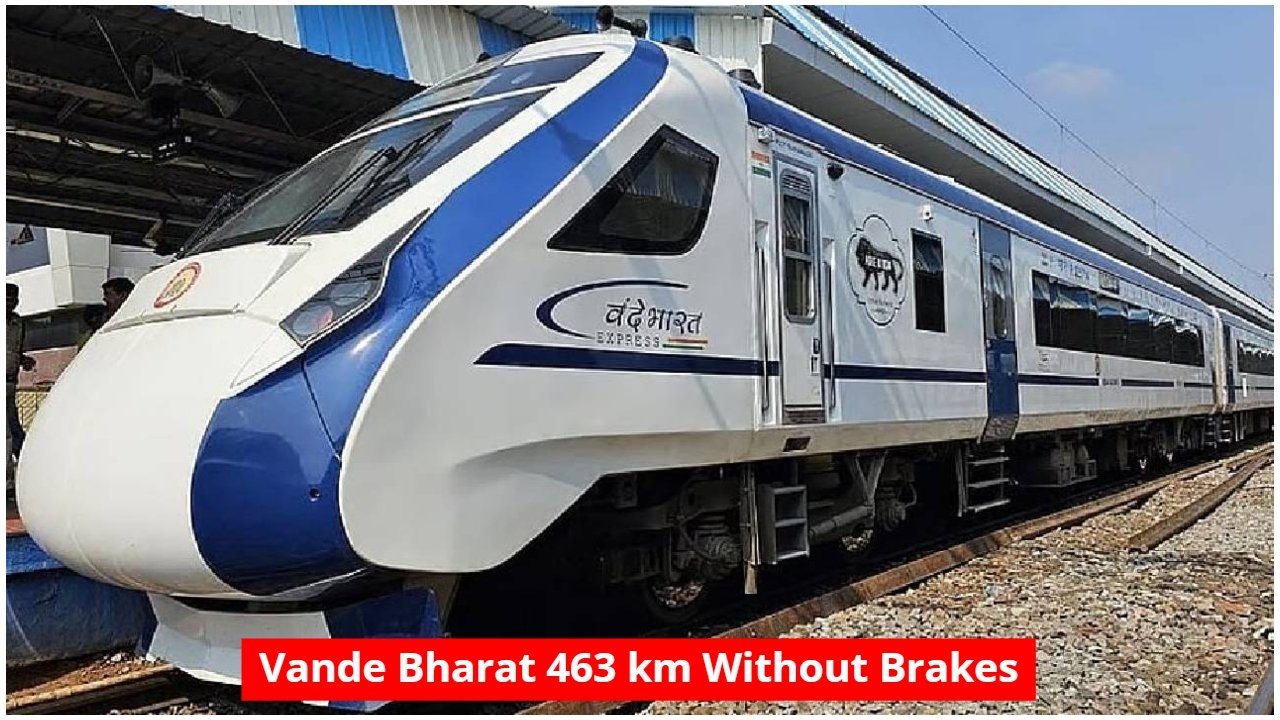
15 November 2026: Vande Bharat 463 km without brakes raises serious questions about railway safety after an empty train rake travelled hundreds of kilometres despite repeated warnings from its loco pilots.
Vande Bharat 463 km Without Brakes: What Happened?
An empty Vande Bharat train travelled approximately 463 km from Hatia in Jharkhand to Deen Dayal Upadhyaya (DDU) station in Uttar Pradesh without its coaches’ braking systems functioning effectively. Moreover, the incident has raised serious concerns about railway safety and the procedures followed before moving an empty train rake.
The incident occurred on October 24, 2026, when railway authorities arranged to transport an empty Vande Bharat chair car rake using a freight locomotive. However, the journey reportedly continued even after the loco pilots identified problems with the train’s braking performance.
According to an order issued by South Eastern Railway on November 7, 2026, railway staff received multiple warnings about the poor brake power. Despite these warnings, the train continued its journey until officials at DDU station inspected the rake and discovered that the braking systems of all its coaches had been isolated.
Consequently, the incident has triggered an investigation into the actions of railway employees, including the maintenance staff, section controllers, traction controllers and train crew involved in the movement.
Hatia to Jhansi Vande Bharat: Why Was an Empty Rake Moving?
The empty Vande Bharat chair car rake was scheduled to travel from Hatia in Jharkhand to Jhansi in Uttar Pradesh on October 24. Instead of using its own propulsion system, railway authorities arranged for a freight locomotive to pull the rake throughout the journey.
However, the movement required proper integration between the braking system of the Vande Bharat coaches and the freight locomotive. This arrangement was essential because the locomotive needed to control the brakes of the entire train while pulling it.
According to the railway order, the staff responsible for preparing the rake were expected to ensure that the braking systems worked correctly before departure. Additionally, they needed to follow the prescribed procedures and verify that the locomotive could operate the brakes across the coaches.
However, the preliminary findings suggest that the required checks were not properly completed. As a result, the train started its journey with a serious braking problem that remained unresolved for a considerable distance.
Vande Bharat Brake Fail: Loco Pilots Reported Poor Brake Power
One of the most concerning aspects of the incident is that the train crew reportedly identified the braking problem shortly after departure. According to the November 7 order, the loco pilot conducted a brake feel and brake power test in the Hatia-Ranchi section after the train left Hatia.
During the test, the loco pilot found that the train had extremely poor and ineffective brake power. Moreover, the crew did not simply ignore the problem. The loco pilot submitted a written complaint to the concerned railway officials after reaching Ranchi Junction.
The complaint went to the Section Controller and Traction Loco Controller. However, despite receiving this information, the concerned staff reportedly allowed the train to continue in the same condition.
Another loco pilot, who operated the train from Muri station, also raised concerns about the braking performance. He reportedly informed the concerned controllers that the brakes could not be applied by dropping the BP (Brake Pipe) pressure.
These complaints were important safety warnings. Nevertheless, the train continued its journey without an effective resolution of the braking issue.
Vande Bharat Poor Brake Power: What Did the Railway Probe Find?
The preliminary investigation identified several possible lapses in the process of preparing and operating the empty rake. According to the railway order, the problem was not limited to a single employee or department. Instead, multiple staff members allegedly failed to perform their assigned responsibilities.
The investigation specifically highlighted the role of coach and wagon maintenance staff. Their responsibility included physically checking the train and confirming that its braking systems were functioning correctly before allowing it to depart.
However, the preliminary findings indicated that these physical checks were not properly carried out. Additionally, the Section and Traction Controllers allegedly failed to take appropriate action despite receiving complaints from the loco pilots.
The order also raised questions about the train crew’s familiarity with the Vande Bharat braking arrangement. Since the crew was reportedly unfamiliar with the system, they failed to physically verify whether the brakes were being applied in the individual coaches.
Therefore, the investigation pointed towards failures at different stages, from maintenance and inspection to communication and operational decision-making.
Vande Bharat Coach Brakes Isolated: How Was the Problem Discovered at DDU?
The braking issue came under serious attention only after the train reached Deen Dayal Upadhyaya (DDU) station in Uttar Pradesh’s Chandauli district.
There, railway officials inspected the empty rake and discovered that the braking systems of all the coaches had been isolated. In simple terms, the coaches’ brakes were not functioning as part of the train’s braking arrangement, which meant the train could not apply its coach brakes in the normal manner.
Moreover, the discovery helped explain why the loco pilots had repeatedly complained about poor brake power during the journey.
According to the order, the train had travelled approximately 463 km using only the freight locomotive’s brakes and regenerative braking, without the application of the coaches’ braking systems.
This detail makes the incident particularly serious because a train’s braking arrangement plays a critical role in controlling its movement and bringing it to a safe stop. Therefore, allowing a rake to travel such a long distance without effective coach braking raises significant questions about inspection procedures and operational safety.
South Eastern Railway Probe: Who Could Face Action?
Following the incident, South Eastern Railway directed the Divisional Railway Manager (DRM) of Ranchi to investigate the matter in detail and identify the employees responsible for the lapses.
The preliminary findings identified several categories of staff whose actions required further examination. These included:
| Railway Staff | Reported Lapse |
|---|---|
| Coach and wagon maintenance staff | Failed to properly verify the functioning of the coaches’ brakes before departure. |
| Section Controller | Allegedly failed to take appropriate action after receiving information about poor brake power. |
| Traction Loco Controller | Reportedly did not ensure that the braking complaint received proper attention. |
| Train crew | Failed to physically verify whether the coach braking systems were functioning correctly. |
However, these findings are preliminary and do not establish the final responsibility of every employee involved. The detailed investigation is expected to examine the circumstances, identify individual lapses and determine what corrective measures are necessary.
Additionally, South Eastern Railway has called for corrective and preventive measures to ensure that similar incidents do not happen again.
Sairang Kolkata Express Derailment: Why Are Railway Safety Concerns Growing?
The Vande Bharat braking incident occurred just days before the Sairang-Kolkata Express derailment in Assam on November 11, 2026. The two incidents have drawn attention because reports have raised concerns about potentially similar braking-related issues.
However, it is important not to treat the two incidents as having the same confirmed cause. The available information about the Vande Bharat incident specifically concerns isolated coach brakes and failures in the inspection and reporting process.
Meanwhile, the derailment of the Kolkata-Sairang Express is a separate incident that requires its own investigation to establish the exact cause. Any direct connection between the two incidents would need confirmation from railway authorities.
Nevertheless, both incidents have brought railway safety India back into focus, particularly the importance of proper maintenance, equipment inspection and timely action when railway employees report technical problems.
What Does the Vande Bharat Brake Failure Incident Mean for Railway Safety?
Railway safety depends on several interconnected systems. These include properly maintained equipment, trained employees, effective communication and strict compliance with operating procedures.
In this case, the preliminary findings suggest that the warning system within the railway operation did not work as expected. The loco pilots reportedly identified the braking problem and informed the concerned officials. However, the train continued its journey without the issue being properly resolved.
Moreover, the incident highlights why physical inspections are essential even when railway staff conduct routine brake tests. A technical issue can remain undetected if employees rely only on assumptions instead of verifying the actual condition of the equipment.
Additionally, staff members operating unfamiliar train configurations need adequate knowledge of the braking arrangements and the procedures required to verify their functioning.
Ultimately, the investigation will need to establish how the coach brakes became isolated, why the initial checks failed to identify the problem and why the train continued despite repeated complaints.
Conclusion: Vande Bharat 463 km Without Brakes Raises Serious Questions
The Vande Bharat 463 km without brakes incident is a serious reminder of how multiple operational failures can create major railway safety risks. An empty train rake travelled from Hatia to DDU station despite repeated complaints about poor braking performance, while its coaches’ braking systems remained isolated.
Although the preliminary investigation has identified possible negligence among several railway employees, the detailed probe will determine the final responsibility. Moreover, railway authorities need to examine the inspection process, improve coordination between departments and ensure that every reported technical problem receives immediate attention before a train continues its journey.
For now, the incident raises an important question: if loco pilots report a serious braking problem, why should a train be allowed to continue before the issue is resolved?
FAQs
| FAQ | Answer |
|---|---|
| What happened in the Vande Bharat 463 km without brakes incident? | An empty Vande Bharat rake travelled approximately 463 km without its coaches’ braking systems functioning effectively. |
| When did the Vande Bharat brake failure incident happen? | The incident occurred on October 24, 2026, during the movement of an empty rake from Hatia towards Jhansi. |
| Where was the braking problem discovered? | Railway officials discovered that all the coaches’ braking systems had been isolated during an inspection at Deen Dayal Upadhyaya (DDU) station. |
| Did the loco pilots report the braking problem? | Yes. According to the railway order, loco pilots reported poor brake power to the concerned railway officials at different stages of the journey. |
| How did the train travel without effective coach brakes? | According to the preliminary findings, the train operated using the freight locomotive’s brakes and regenerative braking. |
| Who is investigating the Vande Bharat brake failure? | South Eastern Railway directed the Divisional Railway Manager of Ranchi to investigate the incident and identify the lapses. |
| Was the Vande Bharat incident linked to the Sairang-Kolkata Express derailment? | Both incidents raised braking-related safety concerns, but a direct connection between them has not been officially established. |